Treatment Area Selection
Annual trapping surveys for spongy moth help detect potential problematic areas for this invasive species in Iowa. Trap sites with multiple catches are compared to past survey data, all while considering other factors for a rising spongy moth population at a site or area. Spongy moth egg mass surveys in the fall may also help with determining a proposed treatment site and preferred product.
For more information about the trapping survey, aerial treatments or the invasive spongy moth, visit the Iowa Department of Agriculture & Land Stewardship's (IDALS) website www.iowatreepests.com.

What to Expect on Treatment Day
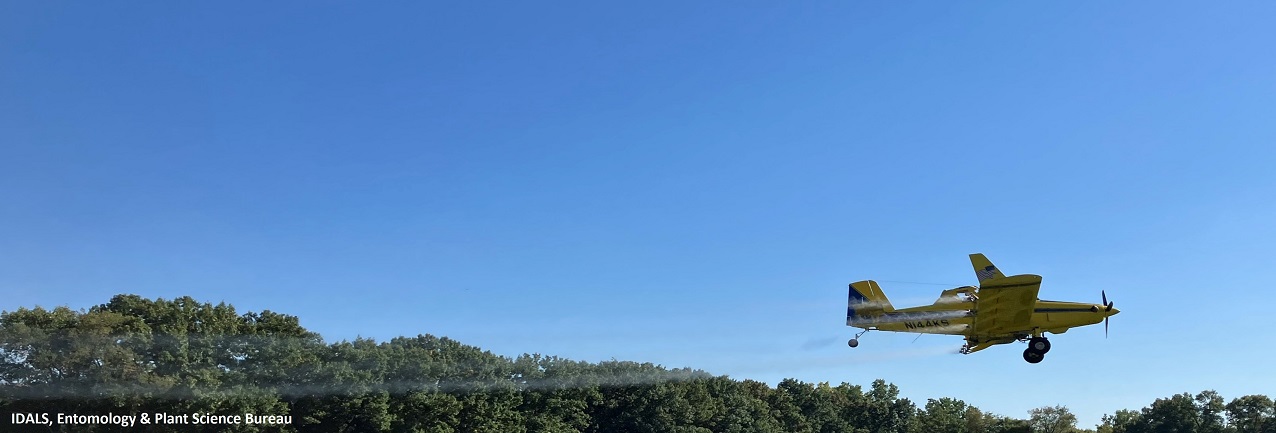
Aircraft typically begin treatment at daybreak and continue until complete. Flying low to target tree canopy, low-flying aircraft can be seen and heard for a period of time. The GPS-equipped aircraft treat targeted treatment sites while making numerous passes, flying approximately 100-200 feet above tree canopy.
Treatment dates depend on insect development, weather conditions, and the stage of the insect targeted. Treatment plans are subject to change due to weather conditions. The most up-to-date scheduling of treatment is available by listening to a pre-recorded message on the IDALS spongy moth treatment Infoline or by visiting this website during treatment years.
Public Notification
IDALS attempts to notify landowners in or within approximately ½ mile of treatment areas by a postcard mailing approximately two weeks prior to the scheduled treatment. IDALS will also notify local media, law enforcement, health departments, and schools. Treatment area maps are available on this website during treatment years.
Prior to the final decision to treat, landowners in or within approximately ½ mile of the proposed treatment area should receive a postcard invitation to a public in-person open house meeting or a virtual online meeting. IDALS issues a press release for any upcoming meeting(s) regarding proposed aerial treatments for the control of spongy moth. The Department also issues a news release closer to the time of a tentative treatment date.
Aerial Treatment Products & Timing
-
Mating Disruption
(Occurs just prior to moth emergence - typically late June).
-
Larval Treatment
(Occurs soon after caterpillar hatch - typically in May).
Contact Information
Mike Kintner
Iowa Department of Agriculture & Land Stewardship
Entomology & Plant Science Bureau
2230 South Ankeny Blvd.
Ankeny, Iowa 50023
515-745-2877
Mike.Kintner@Iowaagriculture.gov